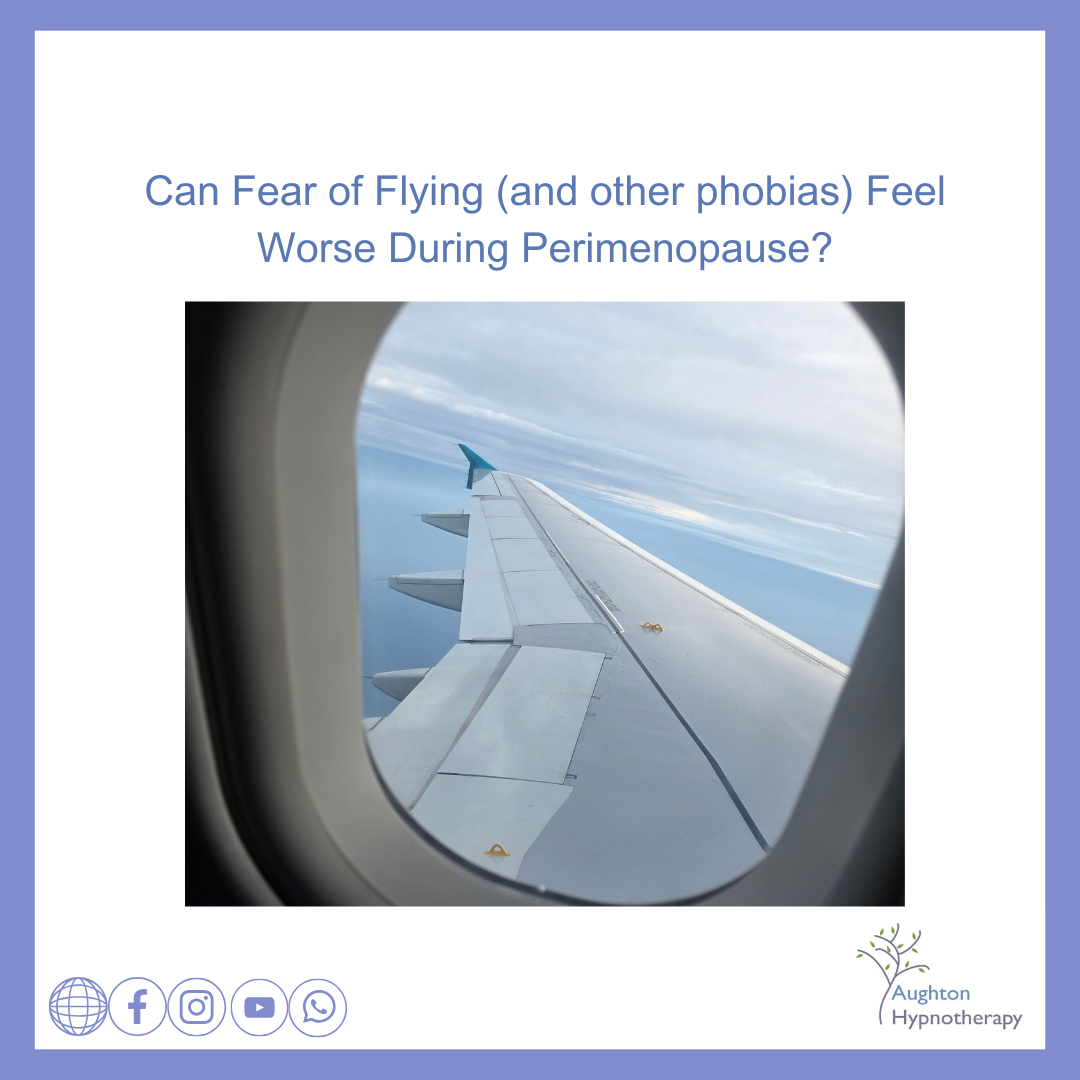
Is this really a thing? Do our hormones really make our fears and phobias worse?
Well, the research says yes!
There are many reasons why women come to see me, and among the reasons they are coming to see me are
“I am finding driving harder – I’m avoiding motorways” or
“I used to be able to fly, so why does it suddenly frighten me?”
For some women, driving or flying has never been particularly comfortable, but it was manageable. Then, during perimenopause, that mild nervousness becomes a much stronger fear. Others describe developing a fear of flying seemingly out of nowhere, despite having travelled happily for many years, or say they’re completely avoiding motorways.
Although there is currently no strong evidence proving that perimenopause directly causes these fears or phobias, research does suggest that hormone changes can affect anxiety, panic sensitivity and the way our brain responds to perceived threat.
Similar changes may be noticed during the late luteal phase – the part of the cycle after ovulation and before a period kicks in (otherwise known as the premenstrual part of the menstrual cycle).
A bit of science: after ovulation, progesterone rises alongside allopregnanolone, a substance that interacts with GABA receptors in the brain. GABA is part of the brain’s natural calming system; as menstruation approaches, progesterone and allopregnanolone fall.
Some women may be particularly sensitive to these hormonal changes. They may notice increased anxiety, irritability or physical symptoms of panic, such as a racing heart, dizziness, nausea or breathlessness.
Perimenopause can make things feel even more unpredictable. Oestrogen does not simply fall gradually and consistently. It can fluctuate considerably, while progesterone becomes less predictable as ovulation becomes increasingly irregular.
These hormonal shifts may affect how safe and settled we feel.
Research is exploring the relationship between oestrogen and “fear extinction.” Fear extinction is the process through which the brain learns that something that once felt threatening is now safe. It is an important part of overcoming fears and phobias.
Studies suggest that lower oestrogen levels may be associated with poorer retention of this safety learning and a stronger return of the physical fear response. This may explain something I often hear from clients:
“I know logically that flying is safe, but my body doesn’t believe me.”
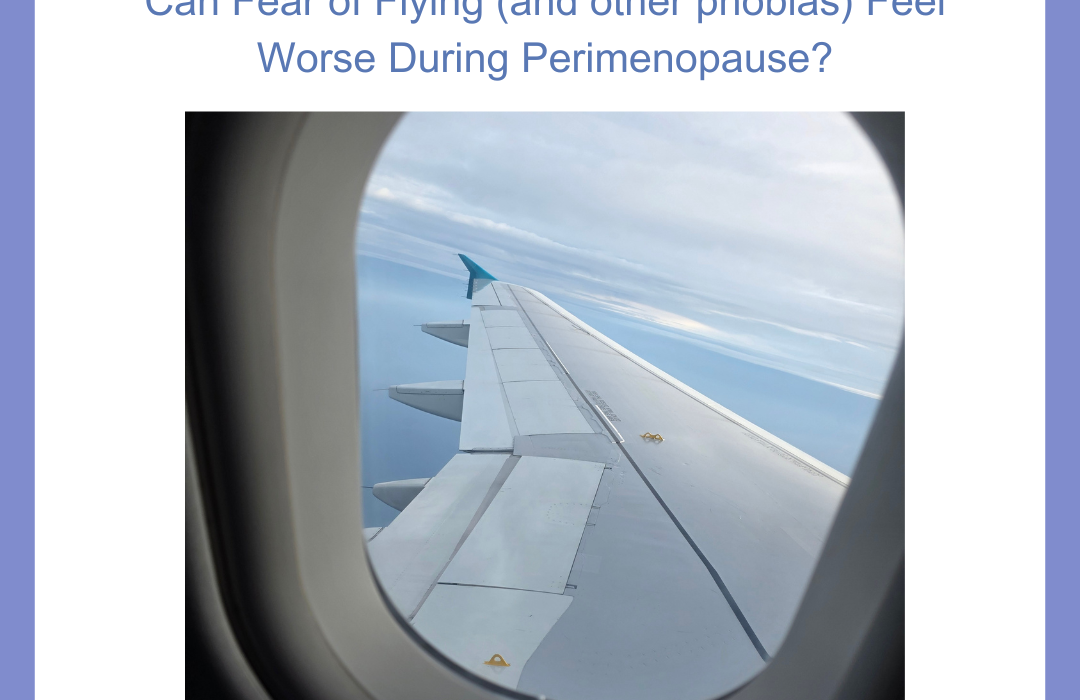
Flying can bring several worries together. Concerns may include turbulence, heights, being trapped, losing control, experiencing a panic attack, or being unable to escape. If hormonal changes have already made the nervous system more sensitive to bodily sensations and perceived danger, boarding an aeroplane can suddenly feel much more difficult.
Research following women through the menopausal transition has found that anxiety may increase during perimenopause, particularly in women who had relatively low anxiety beforehand. There is also emerging evidence that phobic anxiety can increase across reproductive ageing.
However, it is important to keep this in perspective. Not every woman will have increased anxiety or develop a phobia during perimenopause. Hormonal changes are unlikely to be the whole explanation. Previous experiences, stress, sleep disruption, hot flushes, life changes and existing anxiety patterns may all play a part.
Perhaps a better way of putting it is that perimenopause may create a period of enhanced vulnerability. An old fear may return, a manageable concern may intensify, or a new avoidance pattern may develop.
Knowing this is more common than you think, and understanding why, can be very comforting. You are not “being silly,” and you have not suddenly lost the ability to cope. Your brain and nervous system may simply be responding differently during a time of considerable physical and hormonal change.
The encouraging news is that fears and phobias can be treated, sometimes in as few as 4 appointments*.
Solution Focused Hypnotherapy can help you understand the anxiety response, reduce the brain’s focus on threat and begin building calmer, more helpful patterns of thinking. Rather than repeatedly examining everything that might go wrong, we focus on how you want to feel, the small signs of progress, and the steps that can help you regain confidence.
Hormones may help explain why a fear has appeared or grown stronger, but they don’t mean the fear has to stay in control.
With the right support, you can feel calmer, more confident, and able to look forward to travelling again.
If you’d like to discuss this or anything else, please get in touch
Jen
Aughton Hypnotherapy
*4 appointments for phobias depend on the initial consultation.